
Luxury automobile manufacturer Ferrari has unveiled the energy management concept behind its breakthrough 30-metre foiling yacht known as Ferrari Hypersail. The ocean-racing monohull is currently under construction in Pisa, Italy, with an anticipated launch date of late 2026.
Once delivered in 2027, Ferrari Hypersail will be the first of its size to be entirely self-sufficient, operating on renewable sources such as solar and wind, as well as crew-generated energy. The manufacturer has now shed light on its first-of-a-kind energy concept – developed by the Hypersail Tech Team in Maranello – which has been conceived to ensure maximum efficiency for self-sufficiency during long-distance sailing.
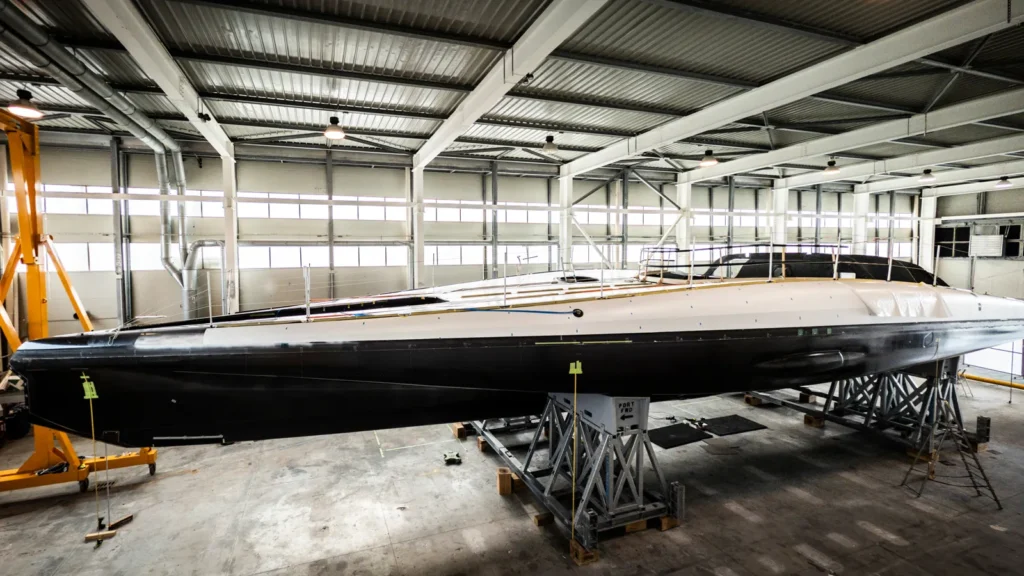
Above deck
Core to the energy concept is a new Winch by Wire system, which “reimagines” traditional winch systems by directly transforming human-generated power into above-deck movements. The system converts the power generated by the crew’s muscular strength into electrical power, which is then redistributed to the various functions of the yacht’s sail plan.
The core advantage for grinders [the operators of the yacht’s winches] is the ability to maintain a constant and efficient cadence, with the system reducing any effort escalation as found with conventional systems. The Winch by Wire is designed to ensure a consistent power output from both the system’s efficiency and human performance, allowing a single crew member to manage loads of up to nine tonnes.
Electricity generated by the pedestals – using the same electric motors from Ferrari’s Purosangue and F80 suspension systems – is fed into the onboard grid to power sail winches and hydraulic pumps in real time. The same approach has been used on the newly unveiled Ferrari 12Cilindri Manuale, where the mechanical action of gear-shifting is converted into an electronic signal.
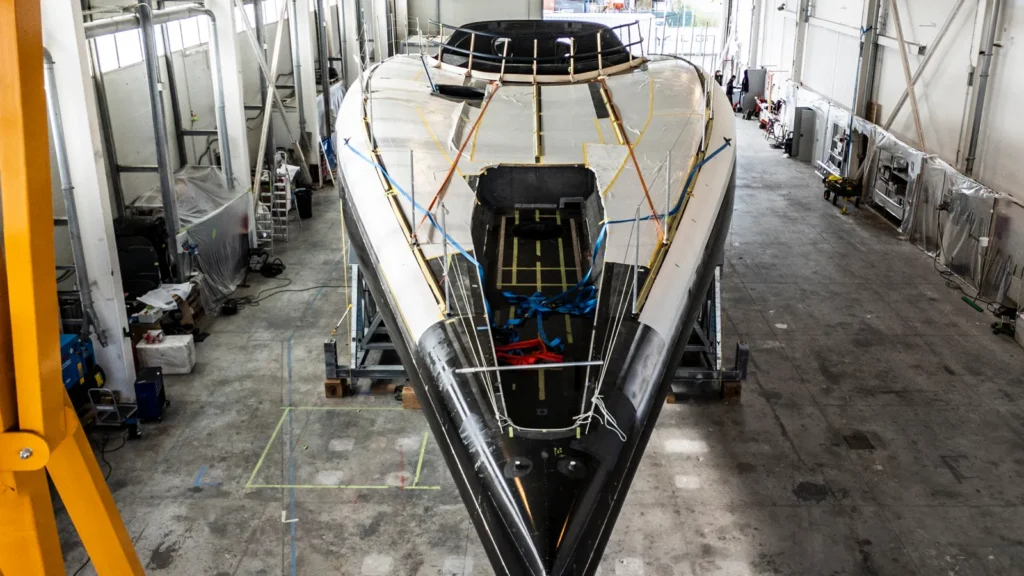
Below deck
Below-deck movements, including the operations for flight control, are managed exclusively through renewable energy sources, with two identical 800V high-voltage batteries distributing the energy flow accordingly. The installed systems are responsible for overseeing the electronics, control stability and ride height on the foils, with reliability guaranteed by applying testing processes borrowed from the automotive sector.
To govern and adjust the appendages, Hypersail engineers developed an active Flight Controller system that manages hydraulic flow across two surface operating modes: slow movements (including the adjustments of the foil arms and canting keel) and fast movements (such as the rapid and continuous movements of the flaps).
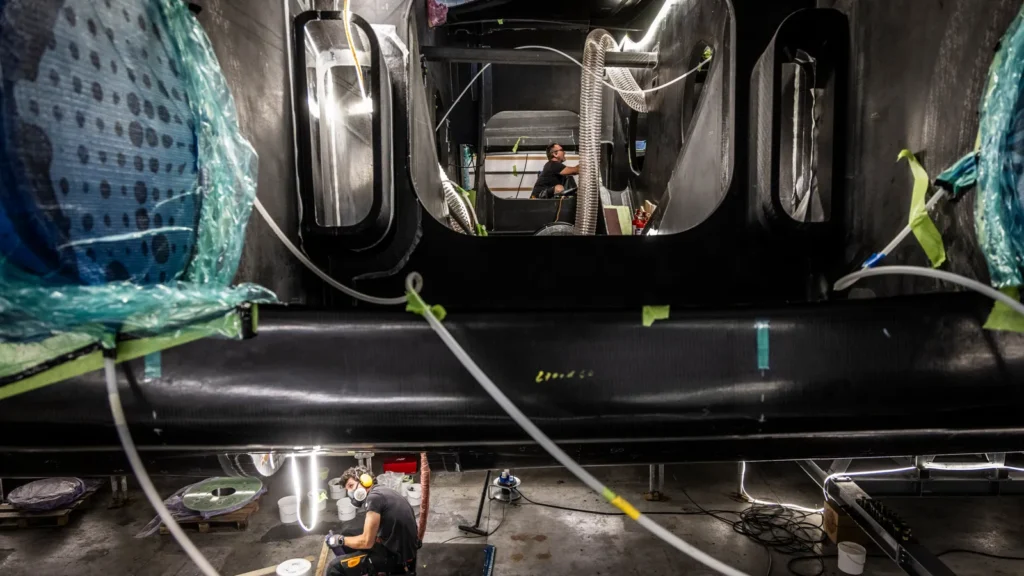
The yacht features 100 square metres of solar panels, which have been integrated into the deck and hull sides – a position that was determined through an advanced study of solar exposure. The panels themselves are walkable and feature a specific grip, technical fastening systems, clips and treatments for easy crew movement. At the stern, wind turbines can be removed and configured according to sailing needs.